How to Set Up a Customer Pager System Without Asking for Phone Numbers
TokenPager Team
Security & Product
Key Insights
- •Research published in the International Journal of Hospitality Management proves that privacy assurance directly forms guests' cognitive trust, significantly reducing customer churn.
- •Over 68% of consumers hesitate to give away personal phone numbers at host stands for fear of robocalls and SMS spam.
- •Zero-PII web pagers send a positive "relational signal" to diners by demonstrating respect for customer boundaries.
- •Eliminating data capture forms drops counter onboarding from 45 seconds down to under 3 seconds per party.
Zero-PII Paging: A queue architecture that issues temporary, localized numeric tokens to guests via client-side sessions, sending real-time page notifications without logging names, telephone numbers, or email addresses.
The Friction of Data Collection at the Host Stand
Guests expect a seamless, relaxing experience when they visit your establishment. However, they are increasingly being hit with a "data grab" right at the host stand. Most digital waitlist apps on the market today require customers to enter their phone number to receive SMS notifications.
While convenient for the business, modern consumers are highly protective of their private contact information. Guests worry that giving away their phone number will expose them to text message marketing lists, robocalls, and potential database leaks. High-profile incidents in the hospitality sector reinforce these fears—such as in 2019, when Marriott International in England was fined heavily by the Information Commissioner’s Office (ICO) due to a massive data breach that failed to protect guests' personal information (Scammell, 2020). When customer data is stored, it becomes an ongoing liability for businesses of every size.
This behavioral friction is backed by empirical academic research. A landmark study published in the International Journal of Hospitality Management (Moon et al., 2022) found that a venue's privacy assurance directly builds cognitive trust—the rational belief that a business respects consumer boundaries. Crucially, the researchers demonstrated that cognitive trust is the primary factor that decreases a guest's intention to switch to another venue. When restaurants demand private data upfront for routine service, they unintentionally spark distrust and increase customer churn.
The Privacy Perspective: Three Approaches to Queue Management
When evaluating queue management platforms through the lens of customer privacy, there are three distinct paths a business can take:
The Hardware Trap (Coasters)
Traditional restaurant buzzers are 100% anonymous, but they are highly expensive and physically restrictive. The guest is tethered to a limited 100-foot radio radius and forced to hold a germ-prone piece of plastic.
The Data Toll (SMS & Native Apps)
These systems offer unlimited range over cellular networks, but introduce heavy privacy friction. They require the customer to "pay" with their phone number or download a bulky 50MB app just for a 20-minute wait.
The Modern Standard (Anonymous Web Paging)
The perfect sweet spot. This approach provides unlimited cloud-based range over cellular data, but ensures zero personal information is ever exchanged or stored.
Spotlight on Trust: How TokenPager Protects Your Guests
An anonymous customer pager system bypasses data friction entirely. TokenPager is designed around a strict "Zero PII" (Personally Identifiable Information) philosophy, ensuring that your venue respects the guest's digital boundaries.
The Contact-Free Flow
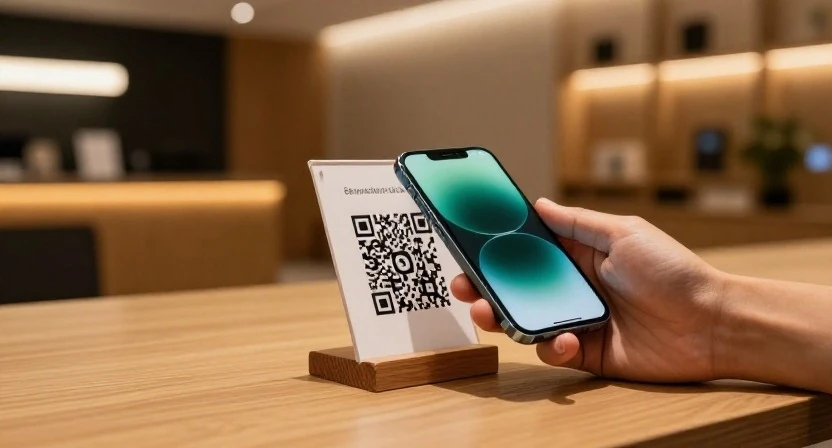
The guest simply scans a QR code at your counter using their native phone camera. Instantly, the system issues a localized, temporary session ID (e.g., "Token #42") directly to their mobile browser without any registration screens.
The Technology
Instead of requesting a phone number or WhatsApp account, TokenPager utilizes modern Web Push Notifications and live Server-Sent Events. The client device gets alerted immediately when their token is called, keeping their personal identity fully private and secure.
Building Brand Loyalty Through Respect
Choosing a contact-free, anonymous customer pager system is not just an operational upgrade—it is a massive customer service win.
In the framework of relational signaling theory, every interaction sends a message. When a business proactively protects a guest's privacy right at the host stand by saying "No phone number or app required," it sends an unmistakable signal of hospitality and operational excellence. By eliminating the data toll, you build instant brand trust and provide the ultimate frictionless waiting experience before they even sit down.
Anonymous Web Paging vs. Traditional Data Collection
Zero Personal Data Needed
No phone numbers, no emails, no SMS opt-ins, and no privacy compliance headaches.
3-Second Host Stand Flow
Customers simply scan a QR code with their phone camera. No typing long phone numbers on greasy touchscreens.
Unlimited Signal Reach
Operates over cellular data and cloud networks, allowing guests to step outside without signal drop-off.
Group Coordination
Multiple guests in a party can track the same token number on separate phones simultaneously.
"Protecting personal information becomes salient due to the high risk of third parties accessing it without consent. In hospitality, privacy assurance and access control are key factors forming cognitive trust, which significantly decreases guests' switching intention."
Deploy TokenPager in 5 Minutes
Turn customer waiting into a positive, branded experience. Zero hardware costs, zero app downloads, and no phone numbers required.
Keep Learning
Explore more guides on queue optimization and guest technology.
The Complete Guide to Modern Guest Pager Systems: Buzzers vs. Web Apps
Explore the evolution of guest pager systems. Learn why restaurants and cafes are replacing expensive plastic buzzers with low-friction, zero-hardware digital pager web apps.
Why the Best Guest Pager App Requires No App Store Download
Discover why native apps cause customer friction and how browser-based guest pager apps offer instant queue management without App Store downloads.
The Best No-Hardware Restaurant Pager System (2026)
Discover why modern venues are replacing traditional physical coaster pagers with cloud-based software. Compare the range, cost, and efficiency of physical vs. digital pager systems.
Frequently Asked Questions
Common questions regarding this guide and modern paging workflows.